










All About Phonics Book Level 1 and Level 2, and How to Use Them at Home

It is nine in the evening. Dinner is done, the school bag is packed for tomorrow, and a new book is lying on the bed between you and your five year old. You bought the All About Phonics Book because reading at school feels rushed and you want your child to feel at ease with words. Now the question is simple. Where do you begin, and how do you keep it from becoming one more fight before bedtime?
This post walks through what the All About Phonics Book Level 1 and Level 2 are for, how to choose between them, and a home routine that works for busy Indian families where the grandparents, the television and the homework diary are all competing for the same half hour.
What the All About Phonics Book is meant to do
Phonics teaches a child that letters stand for sounds, and that those sounds can be joined to read a word. A child who knows this does not have to memorise every new word as a picture. They can work it out. That is the whole idea, and it is why a phonics book is built very differently from a storybook or a picture dictionary.
Honey Maheshwari has been helping children build strong reading foundations since 2016, and the All About Phonics Book series comes from that work with parents and children. The books are made for use at home, by a mother or father who may not have studied phonics themselves. You do not need a teaching degree to sit with one. What you need is ten or fifteen steady minutes and the patience to let your child make sounds that seem silly at first.
The series comes in two levels, Level 1 and Level 2, and you can buy them separately or as a set.
Level 1 or Level 2, where should your child start
As the names suggest, Level 1 is the starting book and Level 2 follows on from it. If your child is new to phonics, or has learnt the alphabet only as “A for Apple, B for Ball” by heart, Level 1 is the right door to walk through. Many children in Indian schools can recite the alphabet beautifully but freeze when asked what sound the letter m makes. That is not a problem with the child. It is just a gap, and a phonics book level 1 is where that gap gets filled.
Level 2 makes sense once your child is comfortable with the basics from Level 1. A quick test at home helps. Write three short words on a piece of paper, something like sat, pin and hop, and ask your child to read them slowly. If they can say each sound and join them into the word, even with a little effort, they are building the skills that the second level grows from. If they look at the word and guess, or say the letter names instead of the sounds, stay with Level 1 for a while longer.
There is no prize for rushing to the second book. A child who is solid on the first level reads with far more confidence than one who has been pushed ahead.
If you are not sure, the L1 and L2 set is a sensible buy for a younger sibling coming up behind, or for a tutor who works with children at different stages.
A simple way to use a phonics book for kids at home
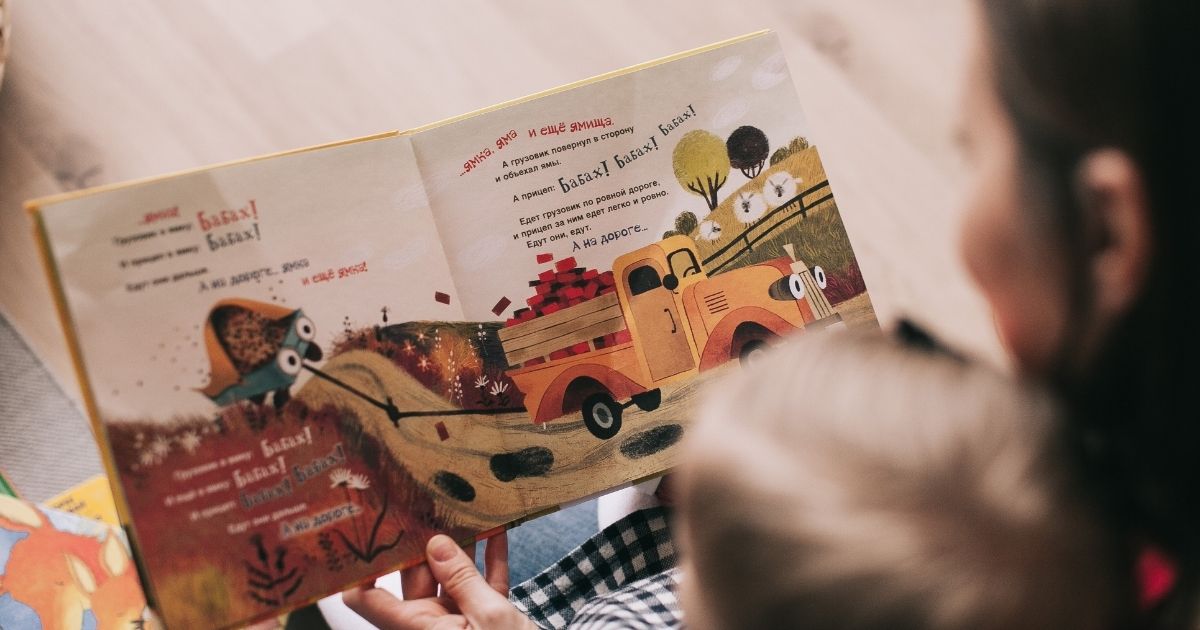
Pick one fixed time. For many families it is right after the evening snack, before homework begins, when the child is fed but not yet tired. Another good slot is the morning, if your child wakes early and the house is still quiet.
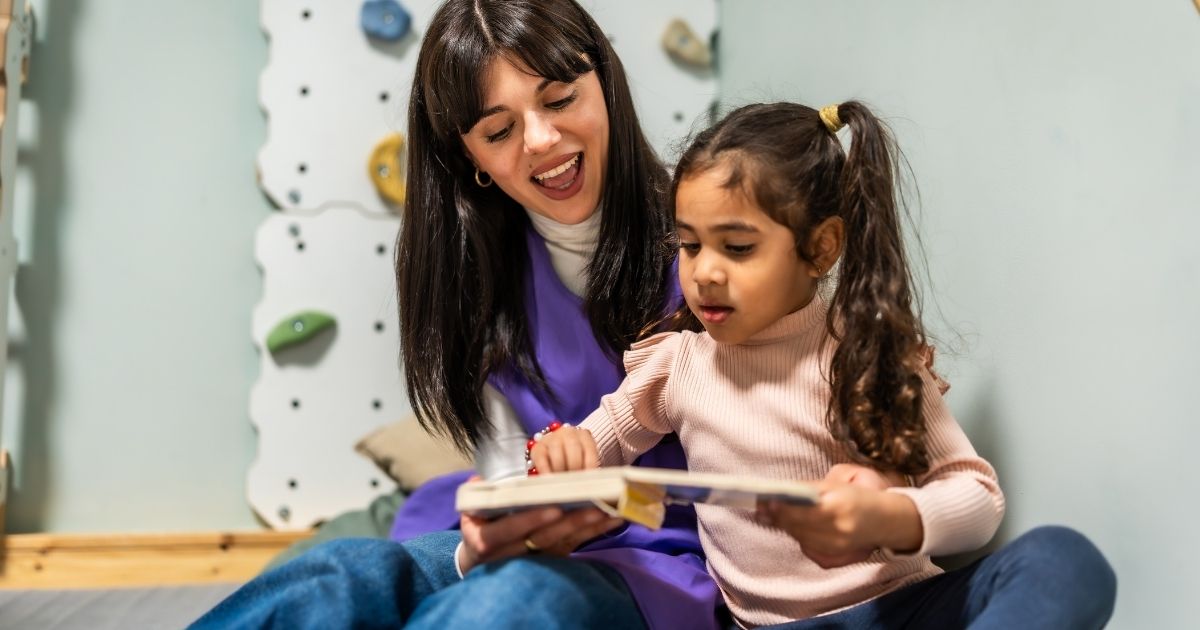
Sit side by side rather than across the table. It feels less like a test.
Do one page, or even half a page, and stop while your child still wants more. This is the part most parents struggle with, because when things go well you want to keep going. Resist it. Ending on a good note is what brings them back to the book tomorrow without a struggle.
Say the sounds clearly and let your child copy you. Point under each letter as you go, from left to right. When a word comes up, slide your finger under it slowly and blend the sounds out loud together. Over a few weeks, let your child take the lead and do the pointing.
Keep a small notebook nearby. When a sound gives your child trouble, write it down and come back to it the next day for a minute before the new page. This is far more useful than repeating the same difficult sound ten times in a row while your child gets frustrated.
In a joint family, it helps to tell the grandparents what you are doing and why. A dadi who says “B for Ball” with love is not wrong, but if she knows that you are teaching the sound of b as in bat, she will often start doing it too. Learning to read at home goes faster when everyone in the house is saying the same thing.
Small mistakes that slow things down
The most common one is adding an extra vowel to sounds. Many of us say “buh” or “muh” when we mean b or m. When a child then tries to blend “buh-a-tuh”, the word bat gets lost. Keep sounds short and clipped, and say m and s as a continuous hum and hiss.
Another is correcting too quickly. If your child reads a word wrong, wait a second. Children often fix their own mistakes when given a moment, and that self-correction is real learning.
The last one is comparing. Your neighbour’s child may be reading full sentences already. Your child may need another month on Level 1. Both are fine. A phonics book is a path, not a race, and every child walks it at their own pace.
Also read
Start learning with Honey Maheshwari
If you want the books in your hands, the All About Phonics Book Level 1 and Level 2 are available on their own or as the L1 and L2 set. For parents who want to understand the method behind the pages, the Recorded Phonics Course for Mothers pairs well with the books. You can call Honey Maheshwari on +91 86795 44344, write to ma**@*************ri.in, or visit the courses section on honeymaheshwari.in to see which level and which course suits your child.
livelihoodparenting


Honey Maheshwari Phonics Method, Step by Step
22nd Oct 2026[…] All About Phonics Book Level 1 and Level 2, and […]