















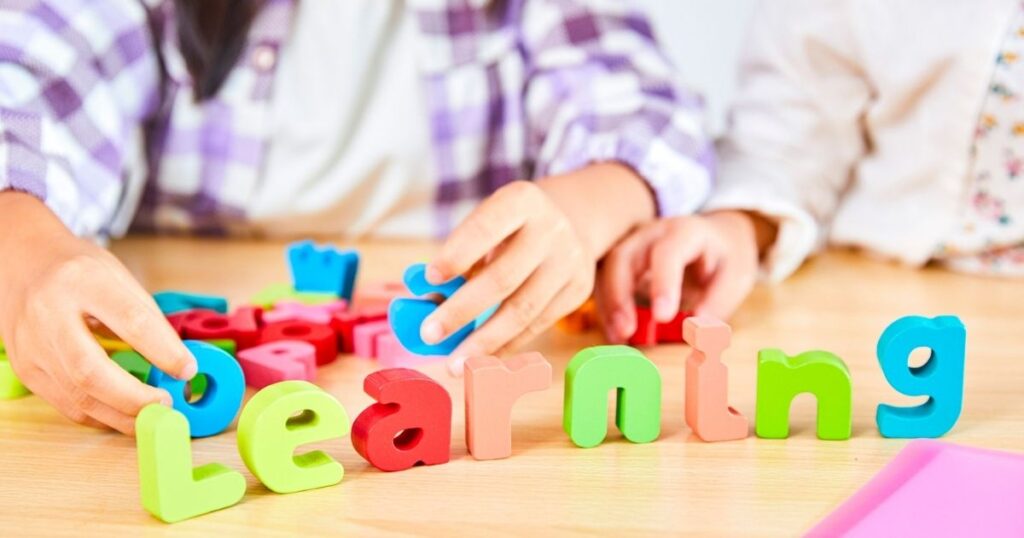







Phonics Activities at Home Using Things Already in Your Kitchen


You do not need a craft shop, a laminator or an app to teach phonics. The average Indian kitchen holds more than enough for weeks of practice. Rice, steel bowls, spoons, a rolling pin and a little leftover atta can keep a four-year-old busy and learning at the same time.
These phonics activities at home are built around one idea. Children remember sounds better when their hands are doing something.
Rice tray tracing
Spread a thin layer of rice or sooji on a steel plate. Say a sound, and ask your child to trace the letter in the rice with one finger while saying the sound again. Shake the plate gently to clear it and go again.
The texture makes it feel like play, and the quiet scratching sound is oddly satisfying for many children. It works especially well for children who resist holding a pencil.
Atta dough letters
Next time you knead dough, keep a small ball aside. Roll it into thin snakes and shape them into letters. Make “s” for snake, “c” for cup, “m” for mummy.
Once your child can shape a few letters, try making a whole short word in dough and reading it together. Then squash it and make another. Children rarely get tired of squashing.
Stirring words
When your child can blend three sounds, try this while you cook. Say each sound in a word slowly, and stir a pot once for each sound. Then stir quickly round and round while you both say the whole word together. “C-u-p, cup!”
It sounds silly written down. It works because the movement matches the idea of blending, separate pieces joined into one smooth action.
Shopping list reading
Write a short, simple shopping list with words your child can sound out. Egg. Jam. Nuts. Take it to the local shop together and let them read each item aloud. Tick it off when you find it.
This turns reading into something useful, not just a school exercise, and children feel very grown up doing it.

Keep it short and stop early
All of these phonics games for kids work best in short bursts. Five to ten minutes, once or twice a day, is plenty. Stop while your child is still enjoying it. Learning through play only works if it stays playful.
Adapting the activities as your child grows
The same kitchen games can grow with your child. For a three-year-old, keep to first sounds and simple tracing. For a four-year-old, add ending sounds and short words in dough. For a five or six-year-old, try writing whole short words on the shopping list or spelling out the names of vegetables with magnetic letters on the fridge.
If your child finds an activity too easy, they will get bored. If it is too hard, they will get frustrated. Watch their face. A child who is concentrating but smiling is right where they should be. Adjust a little up or down from there, and change the game every few days so it never feels like a chore.
Also read
Call to action
For more structured practice alongside these games, Honey Maheshwari’s phonics books, printable worksheets and recorded courses are available at honeymaheshwari.in. Call +91 86795 44344 or email ma**@*************ri.in with any questions.

Sound sorting with steel bowls
Put three bowls on the floor and place a small object in each one to set the sound. Maybe a spoon for “s,” a bottle cap for “b,” and a matchbox for “m.” Now gather a handful of household things and ask your child to sort them into the right bowl by their first sound.
This is one of the best letter sound activities for training the ear, because the child has to listen to the start of each word and compare it.
I spy in the kitchen
This classic still works. “I spy something that starts with t.” Tumbler. Tawa. Tomato. Let your child take turns being the one who spies, too. They will often pick tricky ones to catch you out, which is exactly the point.
As they get better, switch to ending sounds. “I spy something that ends with n.” Pan. Spoon. That is noticeably harder and a good next step.

livelihoodparenting